
More Than Furniture: Why the Dining Table Still Matters
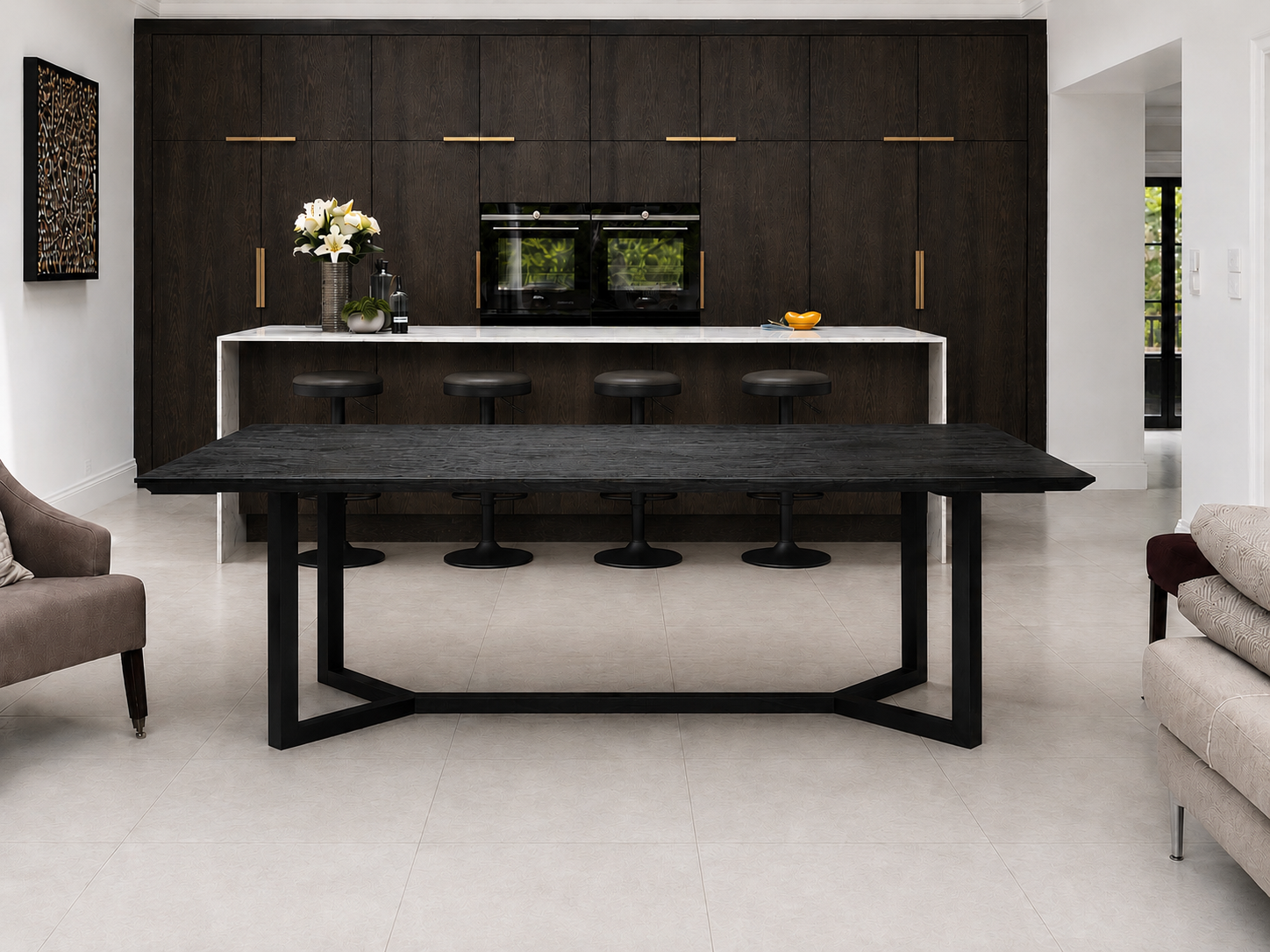
Solid Oak feature dining table, stained black and lacquered for enduring protection in a busy household.
In many homes, the dining table is the one piece of furniture that quietly becomes the centre of everyday life.
It's where families gather at the end of the day, where friends linger over long meals, where children complete homework, and where celebrations and conversations unfold. While kitchens often receive the most attention during a renovation, it is frequently the dining table that becomes the true heart of the home.
A well-considered dining table does more than provide a place to sit. It helps define a space, creates a focal point within a room, and influences how people interact with one another.
The Centre of Everyday Living
Unlike many pieces of furniture, a dining table is rarely used by one person alone.
It is inherently social. It encourages conversation, connection and shared experiences. Whether it's a quick weekday breakfast or a gathering that stretches late into the evening, the dining table plays a central role in how a home functions.
For this reason, we believe a dining table should be considered with the same care as any other significant architectural element within a home.
Creating a Focal Point
In open-plan living spaces, a dining table often acts as an anchor between the kitchen and living areas.
The size, shape and material of the table can influence the overall balance of the room. A large solid timber table can provide warmth and presence within a contemporary interior, while a lighter and more refined design may complement a minimalist architectural space.
The goal is rarely to make the table dominate the room. Instead, it should feel naturally connected to the architecture and the way the space is used.
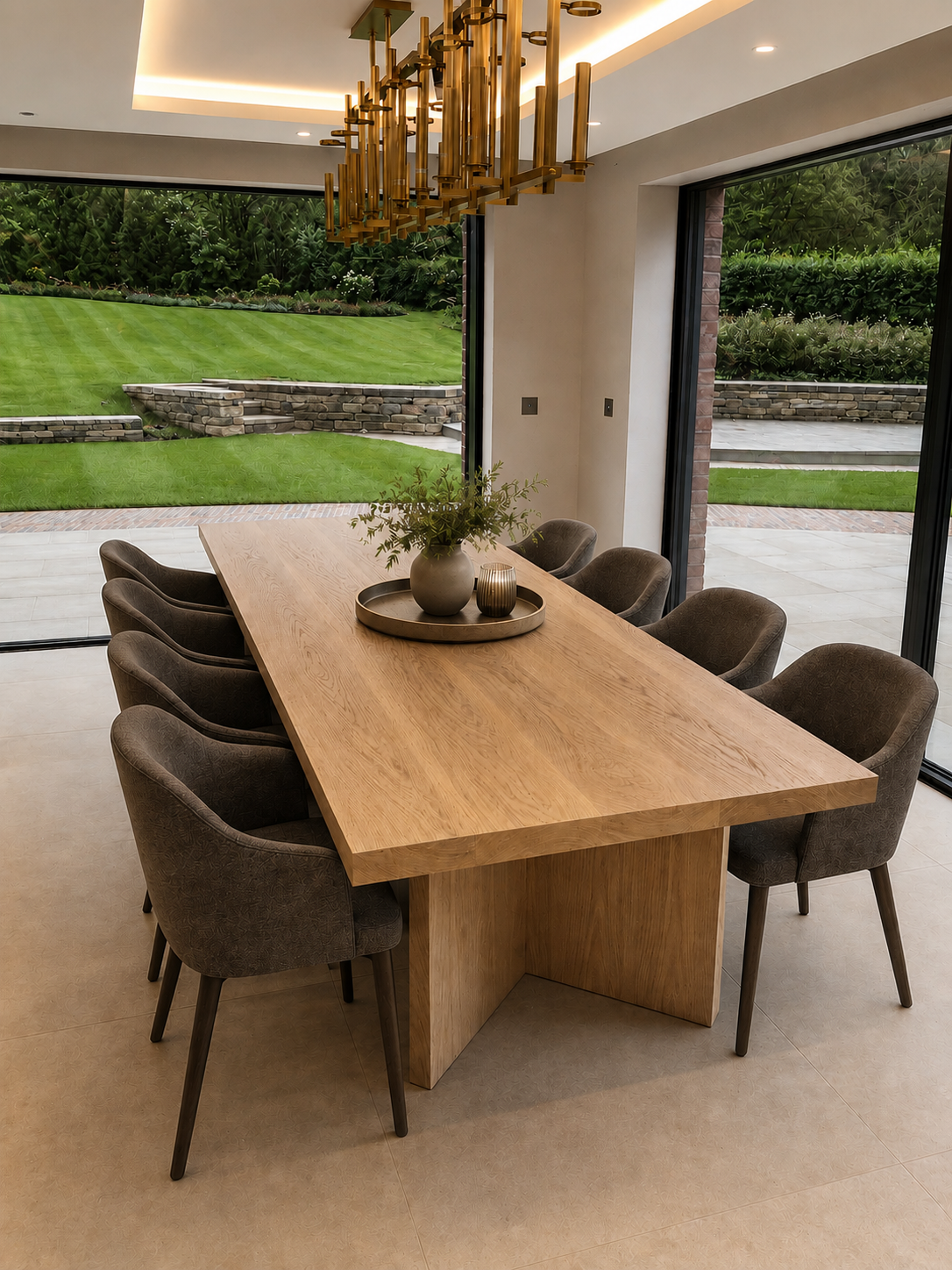
Large Solid Oak dining table at 3000×1250mm. Stained with a light wash to match wooden flooring elsewhere in the room.
Complement or Contrast?
One of the most common questions we encounter is whether a dining table should match the surrounding joinery.
There is no universal answer.
In some homes, using similar materials throughout creates a calm and cohesive interior. Oak cabinetry paired with an oak dining table, for example, can produce a sense of continuity and harmony.
In other spaces, contrast can be far more interesting. A richly coloured walnut table within a light and neutral interior can create depth, character and visual interest. Likewise, a heavily textured timber surface can provide warmth and tactility within a contemporary architectural setting.
The most successful interiors often balance both approaches, creating relationships between materials without making everything identical.
The Importance of Texture
Texture is one of the most overlooked aspects of furniture design.
Natural timber possesses a warmth and depth that manufactured materials often struggle to replicate. Grain patterns, subtle colour variation and the tactile quality of a hand-finished surface all contribute to how a piece is experienced.
These characteristics become even more important in modern homes where materials such as stone, glass and steel are often used extensively. Timber introduces softness and balance, helping a space feel welcoming and lived in.
Over time, these materials also develop character, becoming more beautiful through use rather than less.
Designed Around the Way You Live
No two households use their dining space in exactly the same way.
Some families gather around the table every evening. Others regularly entertain large groups of friends and family. Some require flexibility for working from home, while others prioritise formal dining occasions.
A bespoke dining table allows these considerations to shape the design from the outset.
Dimensions, proportions, materials and detailing can all be tailored to suit the people who will use the piece every day.
The result is not simply a table that fits the room, but one that supports the way the household lives.
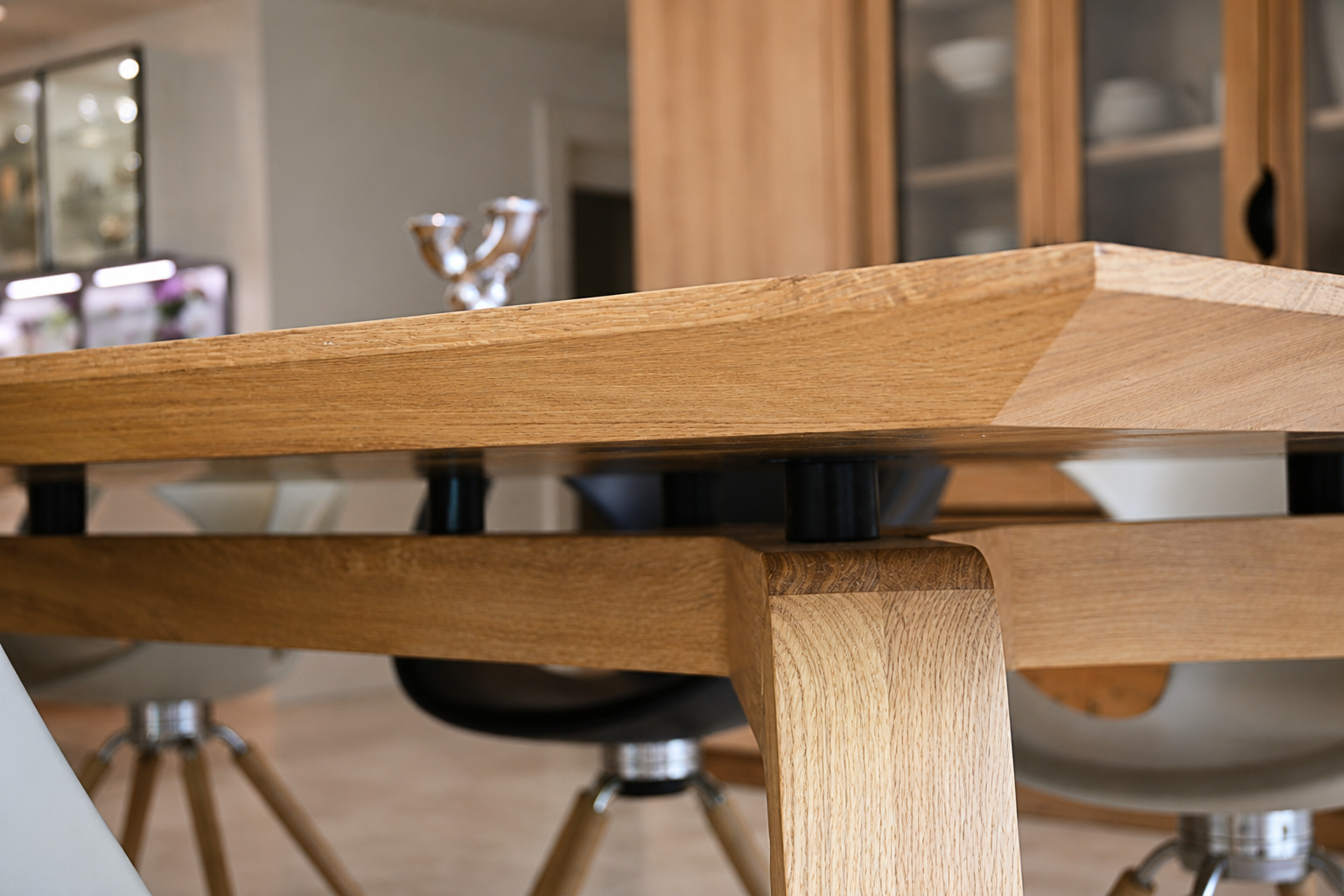
Details matter. Solid Ebony spacers raise the top up from the minimalist base creating lightness and a unique design.
Built to Last
Many of the finest dining tables become part of a family's story.
They witness celebrations, milestones, conversations and everyday moments that accumulate over decades. Unlike trend-driven furniture designed for short-term use, a well-made timber table can serve multiple generations.
For us, this is one of the most compelling reasons to invest in bespoke furniture.
A thoughtfully designed dining table is more than a functional object. It becomes a permanent and meaningful part of the home.
Considering a Bespoke Dining Table?
Whether you're furnishing a new home, renovating an existing space or looking for a statement piece that brings a room together, a bespoke dining table offers an opportunity to create something truly personal.
At Solum Bespoke, every table is designed around the people who will use it, crafted with care, and built to become part of everyday life for many years to come.
Considered. Crafted. Built for Living.